The Forgotten Afghan Soldier Who Fought in America’s Civil War 165 Years Ago
From Afghanistan to the battlefields of America, Mohammed Kahn’s extraordinary journey is a forgotten chapter of history, marked by military service, racial discrimination and a remarkable struggle for justice.
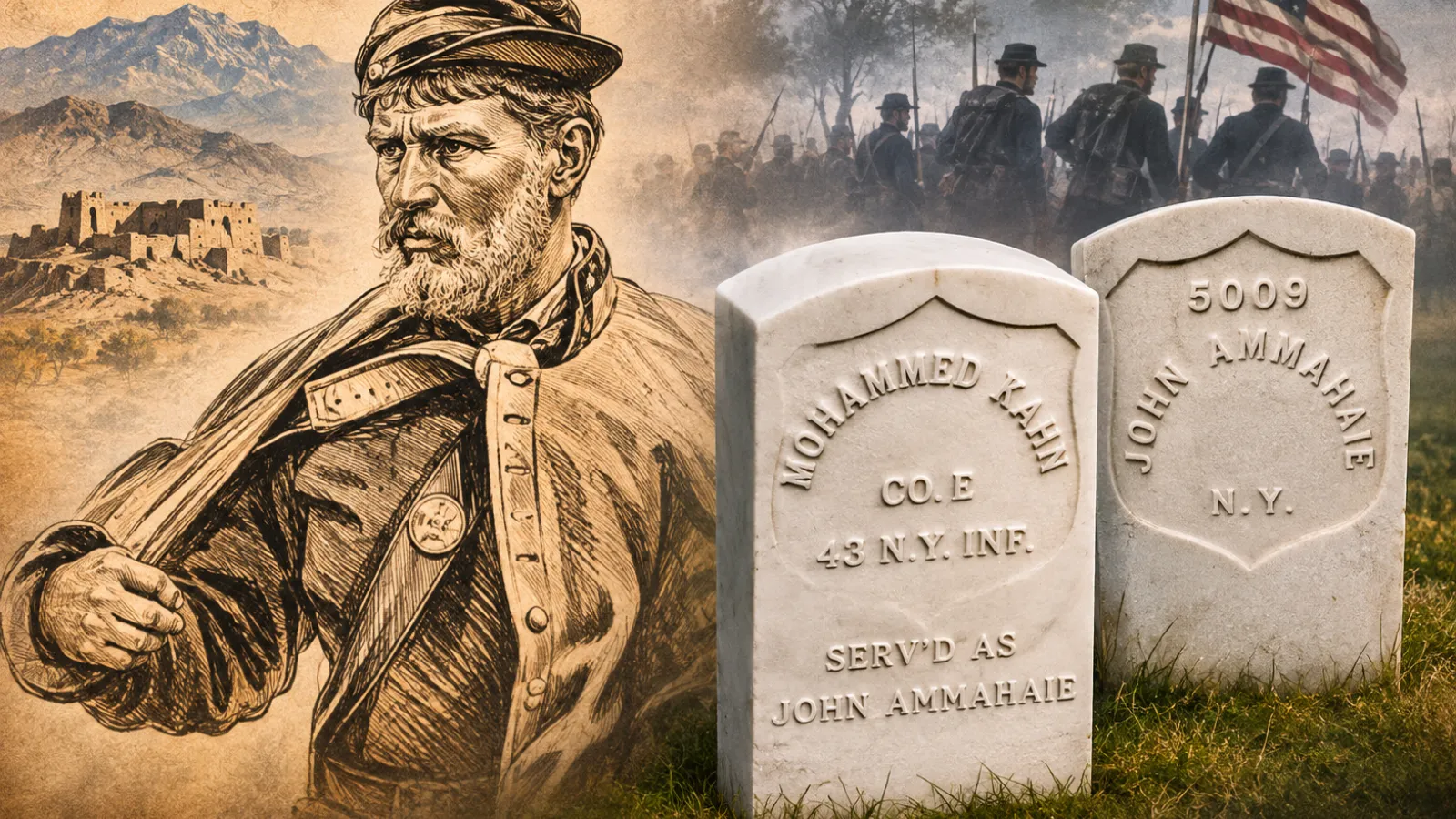
In a military cemetery in Brooklyn, New York, stands a white gravestone bearing the name John Ammahaie. Yet beneath it rests a Muslim soldier raised in Afghanistan whose real name was Mohammed Kahn (محمد خان).
In 1861, some 165 years ago, Kahn joined the United States Union Army, becoming one of the few documented Muslim soldiers to have fought in the American Civil War. His remarkable story remained largely forgotten for more than a century until researchers uncovered historical documents preserved in the US National Archives.
From Afghanistan to the American battlefield
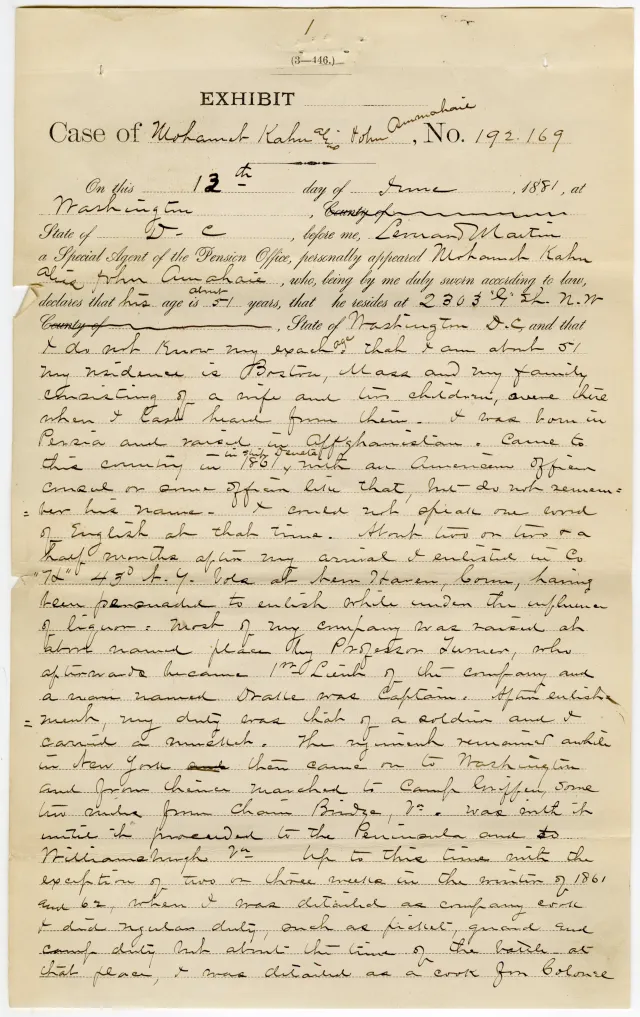
Born in Persia and raised in Afghanistan, according to his own testimony, Mohammed Kahn arrived in the United States in 1861, accompanied by an American consular official. He could not speak English and knew little about the country that would become his new home.
Just two and a half months after his arrival, he enlisted in the 43rd New York Volunteer Infantry Regiment. Kahn later revealed that he had been persuaded to join the army while under the influence of alcohol, a recruitment practice that was not uncommon at the time.
He found himself serving under President Abraham Lincoln in a conflict that would ultimately preserve the United States and bring an end to slavery.
His regiment participated in some of the most significant military campaigns of the Civil War, including Gettysburg and Spotsylvania.
Arrested by his own army
Perhaps the most extraordinary chapter of Kahn’s military service was his encounter with racial discrimination.
In 1863, after becoming separated from his regiment while performing military duties, Kahn was arrested by Union soldiers who mistook him for an escaped enslaved person.
Despite his attempts to explain that he was a serving soldier, officials refused to believe him. His inability to return to his regiment resulted in him being wrongly recorded as a deserter.
Determined to rejoin his comrades, Kahn eventually found his regiment at Spotsylvania, Virginia, in May 1864. Shortly after returning to combat, he was shot in his left hand and required extensive medical treatment.
Despite these hardships, he continued his military service and was honourably discharged on 27 June 1865.
One man, two names
One of the most intriguing aspects of Kahn’s story is why he became known as John Ammahaie.
When he enlisted, his limited English and the difficulty military officials had understanding his name apparently resulted in him being registered under an unfamiliar English name.
That name followed him throughout his military career, government records and eventually to his grave.
There is no evidence that Kahn deliberately abandoned his Muslim identity. In fact, his surviving pension records contain testimony referring to his connection with the Quran, providing rare documentary evidence of Muslim religious life among American Civil War soldiers.
The war ended, but his battle continued
Following the war, Kahn attempted to rebuild his life with his wife, who had arrived from South Asia. He earned a living selling beads, baskets and herbal medicines while continuing to suffer from his wartime injuries.
Approved Pension File for Private Mohammed Kahn (alias John Ammahail), Company E, 43rd New York Infantry Regiment (SC-193744), pg. 2. NAID: 63555085However, securing his military pension proved to be another battle.
For years, he approached government officials, members of Congress and former military officers, seeking recognition of his service. Missing records, racial prejudice and his wrongful classification as a deserter complicated his application.
His case eventually reached the US Congress in 1876, where former military officers provided testimony supporting his account.
After years of persistence, Kahn finally secured his veteran’s pension in 1881, approximately 16 years after the war ended.
Ironically, the paperwork generated by this lengthy struggle would later become the historical evidence that rescued his story from obscurity.
A forgotten grave in New York
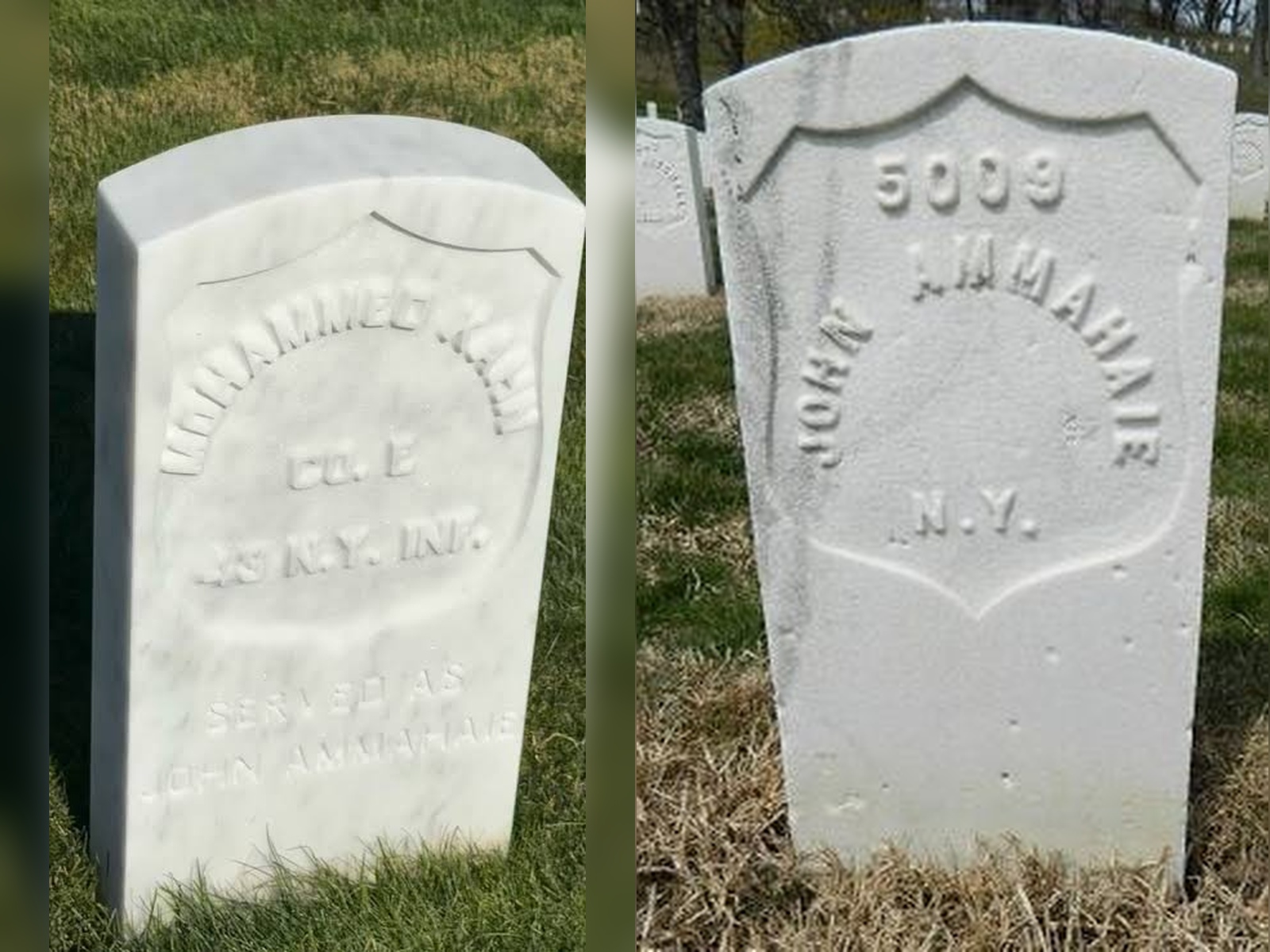
Mohammed Kahn died on 26 May 1891. He was buried at Cypress Hills National Cemetery in Brooklyn, New York, in Section 2, Grave 5009, under his military alias, John Ammahaie.
His final resting place: A grave in Brooklyn under another name
In 2017, the US National Archives brought renewed attention to his extraordinary life by highlighting his surviving pension records. His story was subsequently explored in the PBS documentary series American Muslims: A History Revealed.
Today, his final resting place remains a remarkable historical connection between Afghanistan and the United States.
Long before modern diplomatic relations, military alliances and Afghan migration to America, a man raised in Afghanistan had already played a part in one of the most defining chapters of American history.
For generations, America remembered him as John Ammahaie. But behind that unfamiliar name was a man with an extraordinary story and an identity worth remembering.
His name was Mohammed Kahn — the Afghan-raised Muslim soldier who fought in the American Civil War 165 years ago.